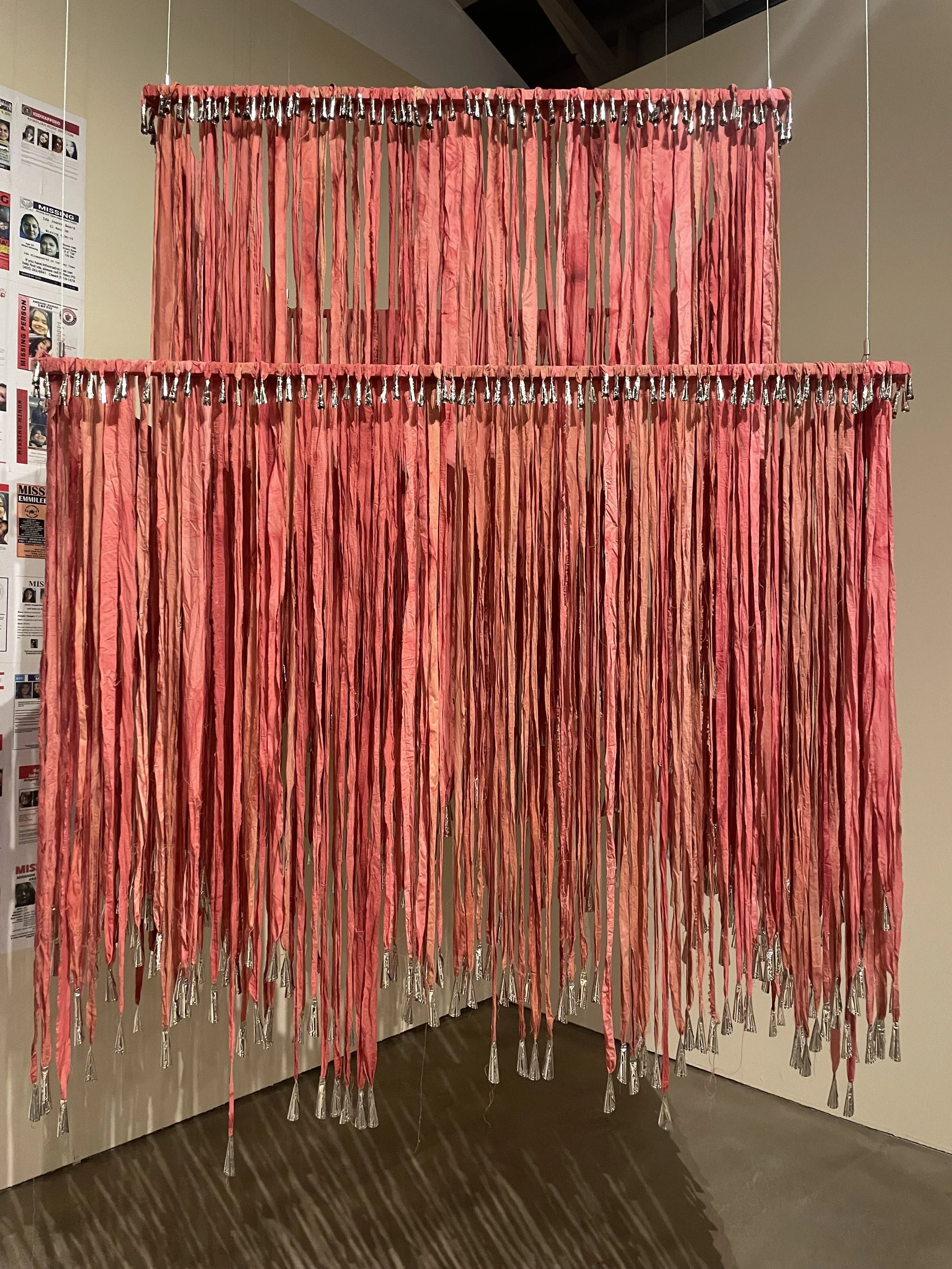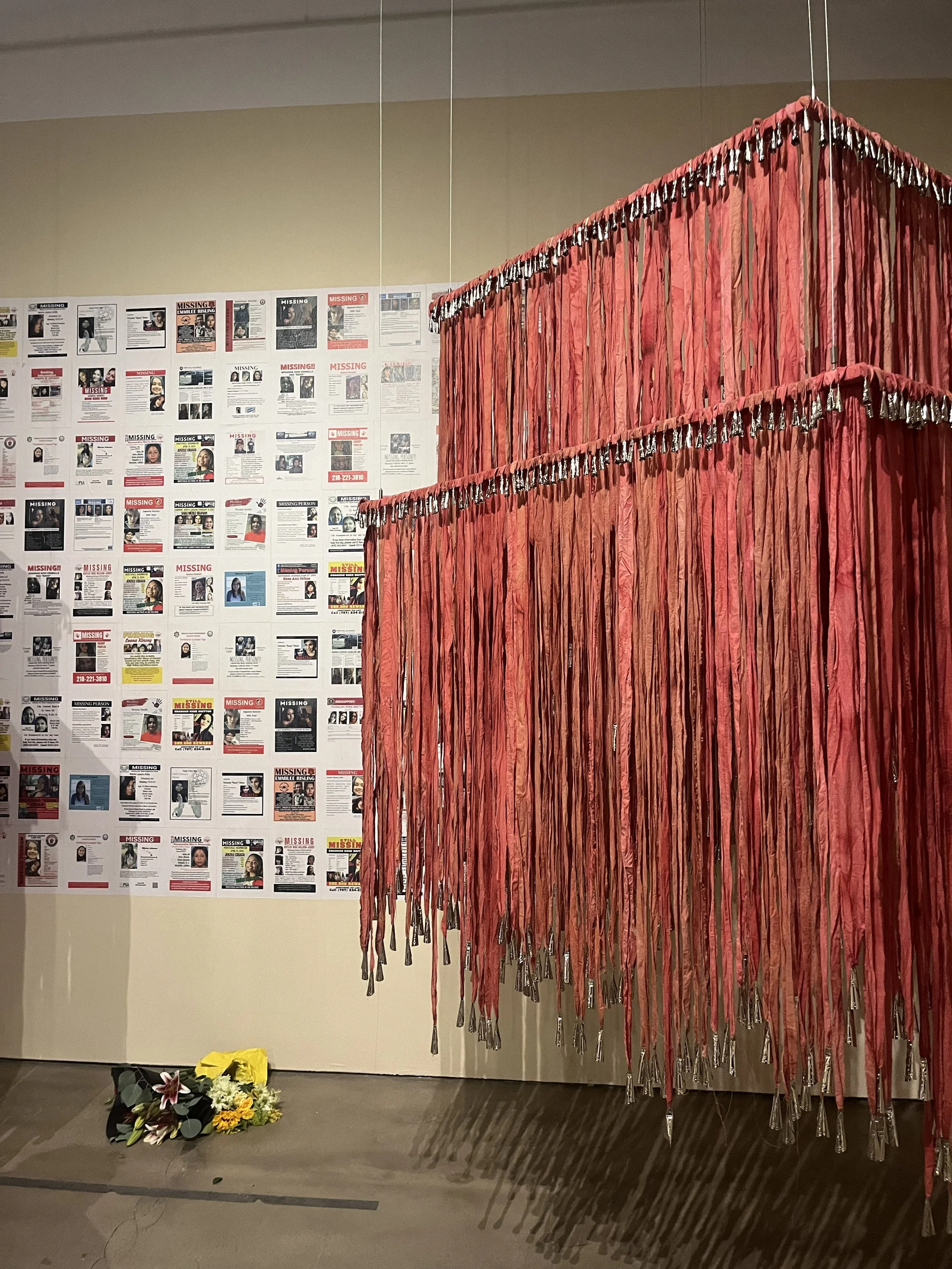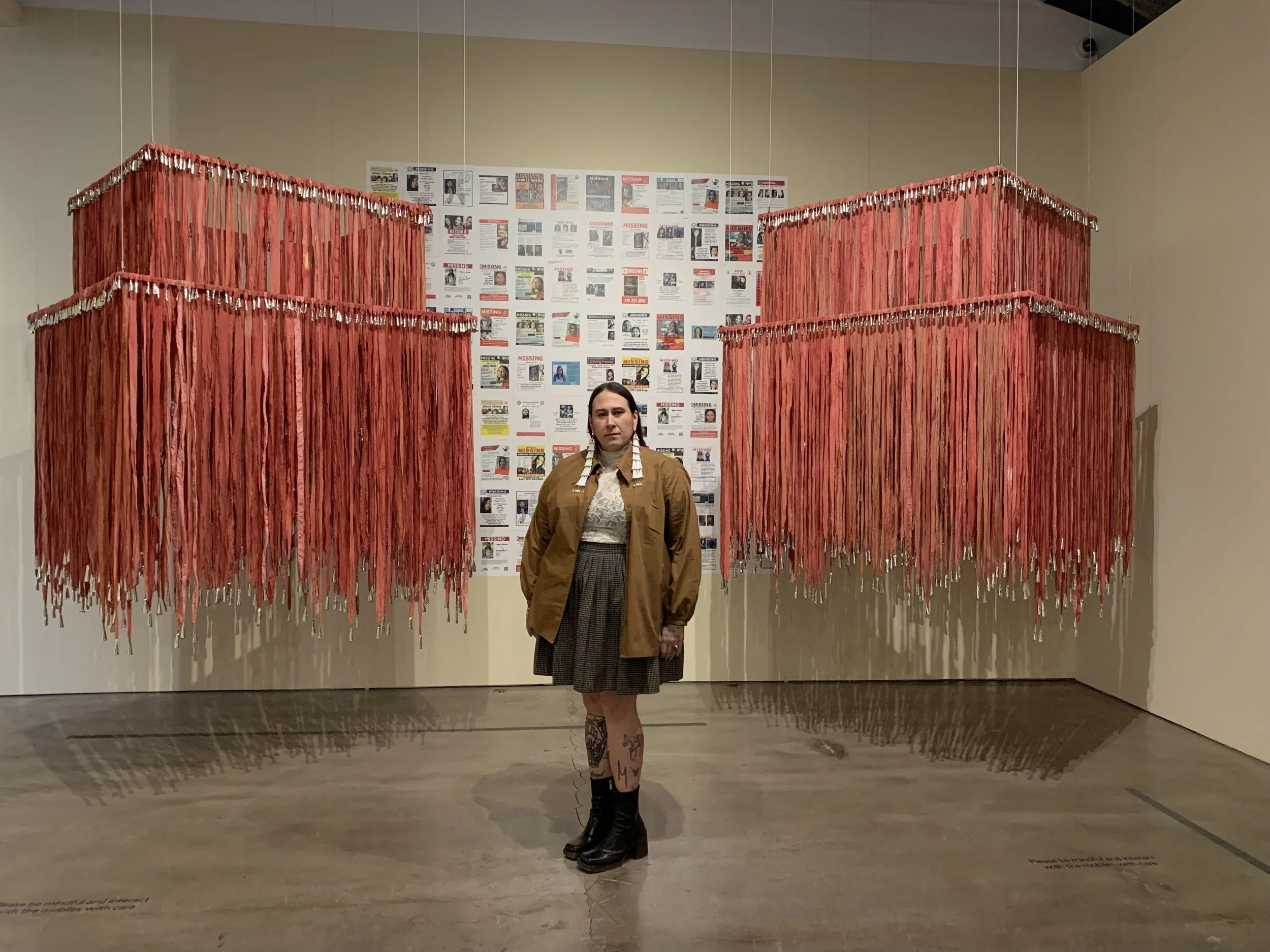
Allegedly The Worst Is Behind Us | ICA San Jose | 2024
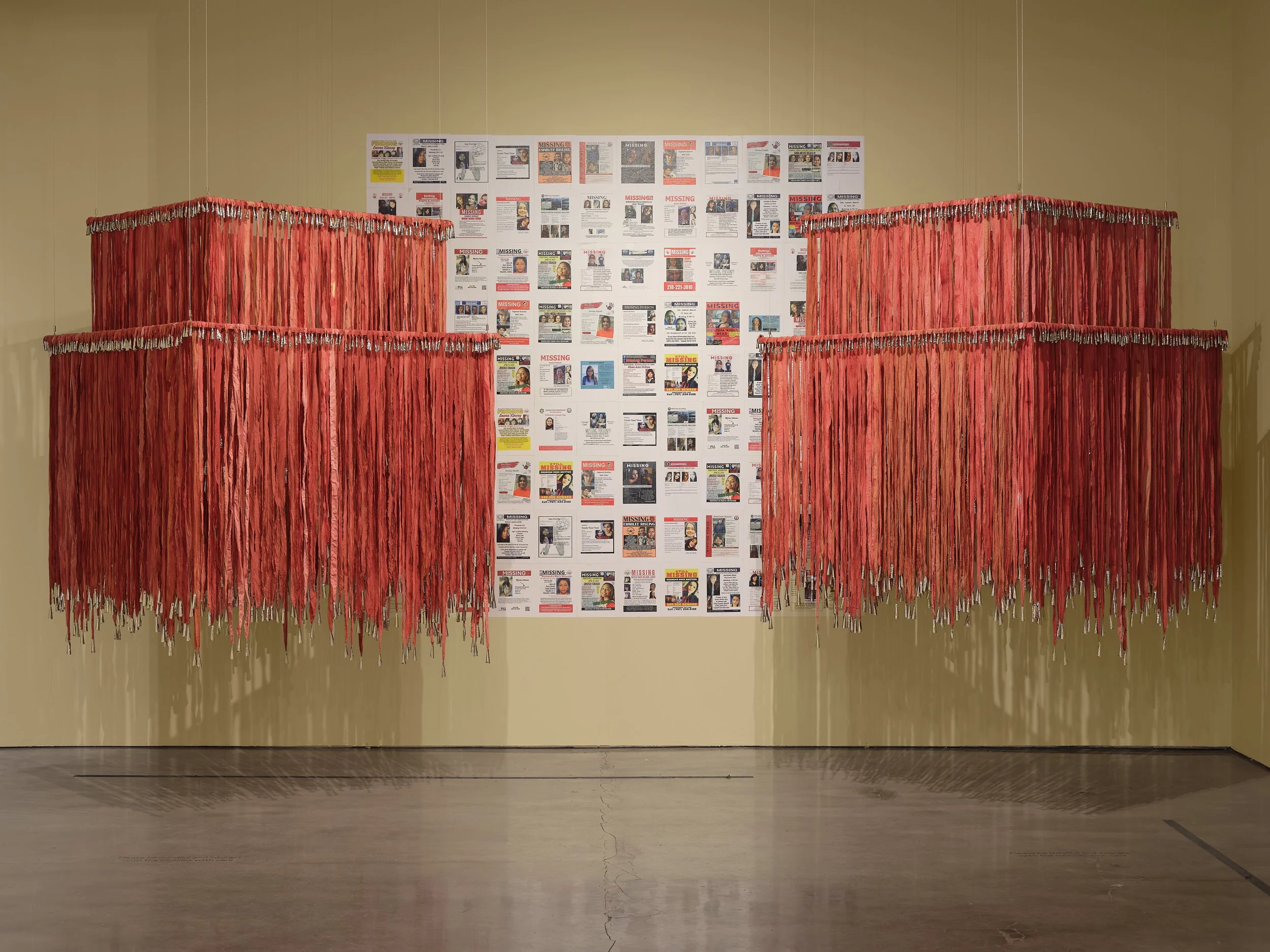
Falamvt Ishla Chike, part of Allegedly The Worst Is Behind Us at ICA San Jose
My late grandmother's belief in what Choctaw women truly “deserve” was shaped by her experiences, and led me to reflect deeply on my own sense of self-worth. As a child, I witnessed violence against the Native women in my family and broader community, a reality that, while never normalized, was seldom spoken of beyond hushed tones. Living within the grim statistics that define the lives of Native women has been both a source of motivation and a heavy burden.
As the cousin, niece, granddaughter, and daughter of survivors, I grapple with the ways this nation’s colonial history continues to empower those who seek to harm our community members. In her book The Beginning and End of Rape, scholar Sarah Deer (Muscogee [Creek] Nation), poignantly states: "Using the word epidemic to talk about violence in Indian Country is to depoliticize rape. . . .rape in the lives of Native women is not an epidemic of recent, mysterious origin. Instead, rape is a fundamental result of colonialism, a history of violence reaching back centuries” (p. 2). In this piece, I invite the viewer to confront the silence surrounding the ongoing harms experienced by Indigenous Women, Girls, and Two-Spirit People.
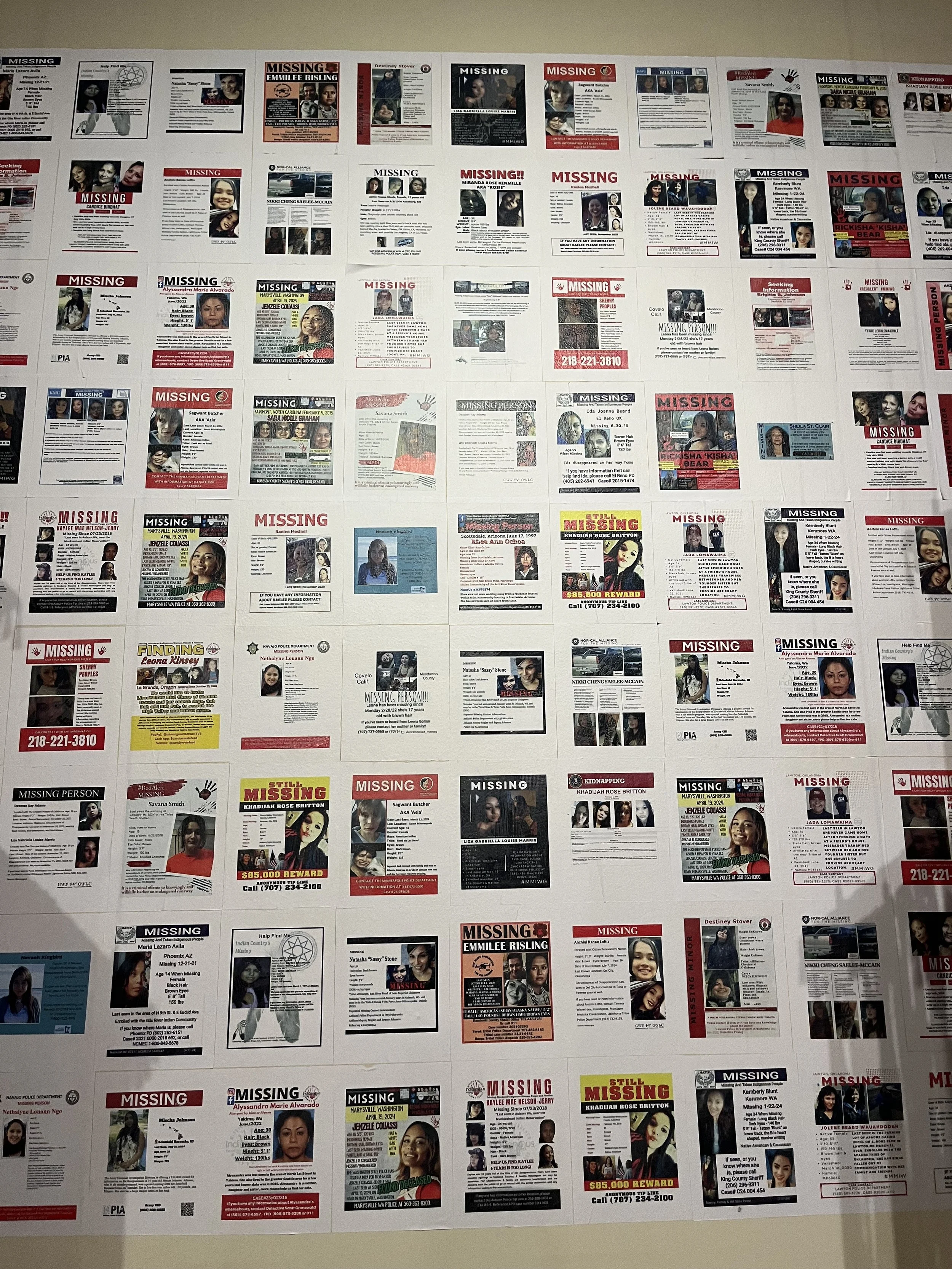
According to a study by the National Institute of Justice, more than 84% of Native American and Alaska Native women have experienced violence in their lifetime, with 56% experiencing sexual violence. The disproportionately high rates of sexual violence against Native women are intricately connected to the crisis of Missing and Murdered Indigenous Women, Girls, and Two-Spirit people (MMIWG2S), as these acts of violence often lead to their disappearance or murder. This installation serves as a stark reminder of this ongoing crisis and the urgent need for justice and healing within Indigenous communities.